Master Manipulators
How to Deal with Emotional Blackmail

 Emotional blackmail (psychological manipulation) is a very common
occurrence in relationships - and some people are very good at it.
These are the so called, "Master Manipulators" ... |
|
Psychologists and psychiatrists have many clients who are dealing with manipulation from their husbands, wives, boyfriends, girlfriends, parents, siblings, friends and others. Some of it is very severe manipulation, which can cause low self-esteem, anxiety, and depression.
The question is, what do you do about it if you're the one being "blackmailed" by one of these master manipulators?
What to do...
First, it's important to realize that manipulators are experts at convincing their "victims" to give them more than they give in return.
You may even feel good, at first, to have someone who treats you special, encourages you to share your deepest thoughts, and reveal your weaknesses. It's just natural to want (and need) someone who listens when we are down, vulnerable and in need of "connection".
But, you must be able to recognize and admit there’s a problem before you can begin to find a solution.
Here are some signs that you're being manipulated:
- When you feel an imbalance in the level of self-disclosure between you and the other person in the relationship.
- When you feel like you are always “on call” to assist your partner, spouse, friend, or sibling but he or she is not there for you when you are in need.
- When you realize that his or her needs take precedence over your own.
- When other friends begin to make pointed observations about the equity in your relationship with this person.
So, first – become aware you are being manipulated. Examine your relationships. Is there someone who is constantly pushing their agenda and trying to get you to side with them? Is there someone who always highlights how much they have done for you and how safe you are if you remain on their side? Perhaps someone who always badmouths others but swears they are only trusting you because you are so special? Are you maybe doing things for other people you are not entirely comfortable with? Are you nervous if you sever the relationship with someone, it might cause you to lose on something or hurt you in any way?
Dealing with manipulative people is difficult regardless of whether they are aware of their actions or not.
The first step to dealing with these manipulators is to recognize that you are being manipulated, which is not always easy.
|
In their book, Emotional Blackmail: When the People in Your Life Use Fear, Obligation, and Guilt to Manipulate You (shown to the right), Susan Forward and Donna Frazier say, "Blackmailers make it nearly impossible to see how they’re manipulating us, because they lay down a thick fog that obscures their actions. All the while, if we attempt to fight back, they ensure that we literally can’t see what is happening to us.” Manipulative people are everywhere: work, school, home, and among friends. |
|
Some people are good at judging the motives and agendas of others and can quickly realize when they are being manipulated.
Trust your judgment and "gut feelings" about these people and then proactively and emphatically set boundaries with the master manipulator.
The next key, according to the experts, is to set personal boundaries for yourself. Once you set a boundary, then it’s a matter of sticking to those boundaries and not wavering.
One expert says, “There are people who tend to give others the benefit of the doubt and those are people who manipulative people love because they’re easy marks. So in this instance, it’s okay to develop a healthy sense of skepticism. Like the old adage, ‘if something (or someone) seems too good to be true’ then it’s important to listen to those intuitions."
“But remember, manipulators are often very charming and great at convincing others of their genuineness and honesty. Some of the more pathological manipulators are really adept at finding the weakness of their ‘mark’ and will exploit that weakness.”
For those who have been manipulated it’s important not to blame yourself. Look at all the people who were taken in by master manipulators like Bernie Madolf or Ken Lay.
Another important tip is to make the covert overt.
If you see someone being manipulative and they are secretive about it, make your reaction transparent.
Say to the person, “Hey, I am not sure what is going on here. Tell me more about what you want or state it clearly.” That also role models for them more appropriate behavior.
It is important to remember that you cannot change a manipulative person’s behavior; only he or she can do that for themselves.
The only person you can control is yourself and your reactions to manipulation.
If you find yourself in a situation where you think someone is taking an unfair or manipulative approach, it is okay to disengage from the moment and take some time to reflect on what is really going on. One way manipulators gain the upper hand is by forcing someone into a quick decision.
If you are the victim of emotional blackmail by a master manipulator, it is important to understand the strategy the manipulator uses to get what they want.
Forward and Frazier (mentioned previously) identify four blackmail types each with their own mental manipulation style:
- Punishers - 'My way or the highway' is the punisher's motto. No matter what you feel or need, punishers override you
- Self-punishers - "self-punishers cast their targets in the role of the 'grown-up' - the only adult in the relationship... supposed to come running when they cry"
- Sufferers - sufferers take the position that "if you don't do what I want, I will suffer, and it will be your fault" (victim playing)
- Tantalizers - Tantalizers are the most subtle manipulators, they offer nothing with a free heart
They go on to identify the 6 major signs of manipulation in relationships:
1. A demand
2. Resistance
3. Pressure
4. Threats
5. Compliance
6. Repetition
Again, the first key is to recognize the manipulator and the type of manipulation or emotional blackmail.
Then, it's critical to do something about it. The type of behavior you accept from people in life is entirely up to you and you must take control of your life and circumstances.
If you need professional help to make it happen, then get it.
As a start, here are some great resources which can provide many strategies and techniques to identify master manipulators and stop emotional blackmail:
|
|
|
PLEASE CONSIDER...
If the information on this site helps you and you'd like to make a donation to BeHappy101.com (to help make others happy), please click on the button below to make a contribution. The amount you donate is entirely up to you. A portion will used to contribute to the happiness of others and is greatly appreciated. [WHY DONATE?] |


| RECOMMENDED PRODUCT |
|
Save The Marriage System  "It's not just about avoiding divorce,  |
| RECOMMENDED ARTICLES |
5 Fast Fixes for a Stronger Relationship
Relationship Communication: Asking Questions
Sex and Happiness
Better Sex Products
10 Secrets to a Better Love Life
Friendship
Soul Mates

| FREE STUFF |
|
Subscribe FREE to  |
|
FREE  Just fill in your name and best email address in the boxes below to get instant FREE access to the entire course... |
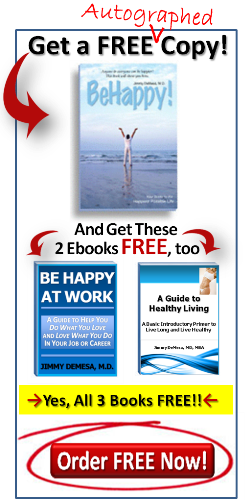
ABOUT JIMMY DEMESA I am an entrepreneur, author, speaker, coach, doctor, husband, and father of two beautiful little girls. I am an entrepreneur, author, speaker, coach, doctor, husband, and father of two beautiful little girls.My personal mission in life is to be a positive, creative force for health and happiness. BeHappy101 is a way for me to fulfill that mission by sharing the best tools, strategies, and information to help anyone live a happier, healthier, more passionate, joyful, fun and fulfilling life.  |
Home | Blog | Store | About | Donate | Contact
Copyright © 2009-2020. All rights reserved.
|
 I'm Jimmy, the founder and creator of this site and the whole BeHappy! system. My life's purpose is to be a positive, creative force for health and happiness and through this website, my books, coaching, and happiness-building programs, I intend to help as many people as possible live their happiest possible lives.