The "You Don't Have it Bad"
Exercise for Fostering Gratitude

|
This website has approached the subject of gratitude in many ways, since it is such an essential component of creating the happiest possible life (the fundamental goal of this BeHappy! system). Gratitude is a feeling of thankfulness and appreciation. Unfortunately, many of us are so caught up in dealing with the “challenges” of life, that we take the great things we already have for granted. |
|

As part of the process to creating a consistent “attitude of gratitude”, there are many things we can do. One of them is the “You Don’t Have it Bad” Exercise.
What this strategy involves is taking a close look at the reality of how so many people are much less fortunate than you and I. Even if you live alone in a 500 square foot apartment, drive an old car, don’t have much of a social life, or don’t even have a close family to enjoy life with, there are many people much worse off. Many of these people are truly in very bad situations, with some rising above their misfortune to become role models for us all.
|
Like the relatively famous story of It’s not unreasonable to imagine that this man must have to deal with much more pain, difficulty, and “stress” in his life than you and I. And you know what? He is a happy, successful businessman. He speaks regularly to large groups of people, helping thousands every year to appreciate how great they really have it in life. He is very grateful just to be alive – even though life is very tough for him. |
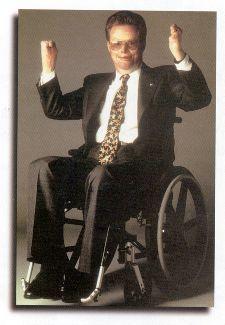 |
When I think of how difficult his life must be, I feel a huge sense of gratitude and appreciation for what I have, and for how relatively “easy” I really have it – even though life can get tough for me at times, too (but not nearly as tough as his). I almost even feel somewhat ashamed that I let anything so "trivial" – like financial challenges, work stress, or relationship difficulties - bother me.
Or what about the story of my friend, Bo Smith? Bo was one of my medical school classmates who had a loving wife and four young children – all under the age of 11. Suddenly, a few years ago he was diagnosed with pancreatic cancer and was dead within 6 months – leaving his wife without a husband and their young four children fatherless.
It makes you think, doesn’t it? Suddenly, your “stressful”, difficult life is not so difficult and your “problems” seem relatively small in comparison. It’s almost embarrassing to think these things get to us like they sometimes do.
Still not feeling better?
Well there’s the other well-know account of the professor at Carnegie Mellon University, Randy Pausch, who gave his “last lecture” after he too was diagnosed with pancreatic cancer.
 |
He just died in 2008 after a brave, upbeat battle, leaving his wife and three young children. He has been an inspiration to many people – even appearing on Oprah – to give the world his “last lecture”. If you haven’t seen it, please do. It brings tears to my eyes every time I watch it and makes me so grateful for what I have. After watching this “last lecture”, I almost feel as if nothing in my life should get me down or stressed. |
Just click here to check it out (it’s about 10 minutes long). It will surely have an impact on your perspective – and make you very grateful for what you have right now.
These are examples of people who, by most accounts, have it much worse than most of us. And there are many more. Like Christopher and Diana Reeves, Itzhak Perlman, and many others (NOTE: when you finish reading the rest of this article, click on the Itzhak Perlman link above to get a moving, inspirational true story about this "master violinist").
These are inspirational and gratitude-building stories of human beings like you and I who have dealt with true adversity – some (like W. Mitchell and Itzhak Perlman) living happy, grateful lives.
I’ll be providing many other stories of adversity for you to read on an ongoing basis if you need more inspiration. Just check regularly in the “Handling Adversity” section of this website for more. Read as many as necessary to provide that sense of gratitude for your own life – just as it is today.
Unless you’ve got a story like one of these people, you should really feel better after considering their lives – and how good we really have it. You might even find yourself waking up everyday thankful for what you have – and for what you don’t have to endure just to get through a typical day (like W. Mitchell does).
So really consider how great most of us have it relative to many others – even with our problems, difficulties, and painful situations. Use this exercise regularly and perhaps you can start to build a true sense of appreciation and gratitude for life – even with all it’s “pressure” and frustrations.
BeHappy! my friends
Other gratitude-building tools:
The "Three Great Things" Exercise
Take Pictures and Create "Moments"
PLEASE CONSIDER...
If the information on this site helps you and you'd like to make a donation to BeHappy101.com (to help make others happy), please click on the button below to make a contribution. The amount you donate is entirely up to you. A portion will used to contribute to the happiness of others and is greatly appreciated. [WHY DONATE?] |


| RECOMMENDED BOOKS |
|
|
|
|
FREE  Just fill in your name and best email address in the boxes below to get instant FREE access to the entire course... |
|
Subscribe FREE to  |
Home | Blog | Store | About | Donate | Contact
Copyright © 2009-2020. All rights reserved.
|
 I'm Jimmy, the founder and creator of this site and the whole BeHappy! system. My life's purpose is to be a positive, creative force for health and happiness and through this website, my books, coaching, and happiness-building programs, I intend to help as many people as possible live their happiest possible lives.